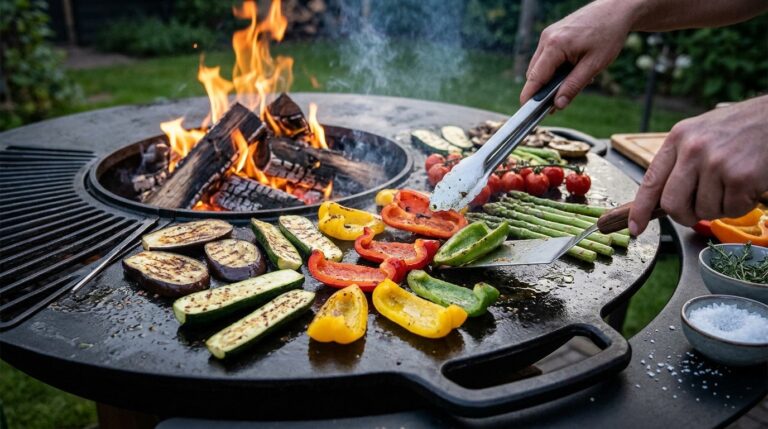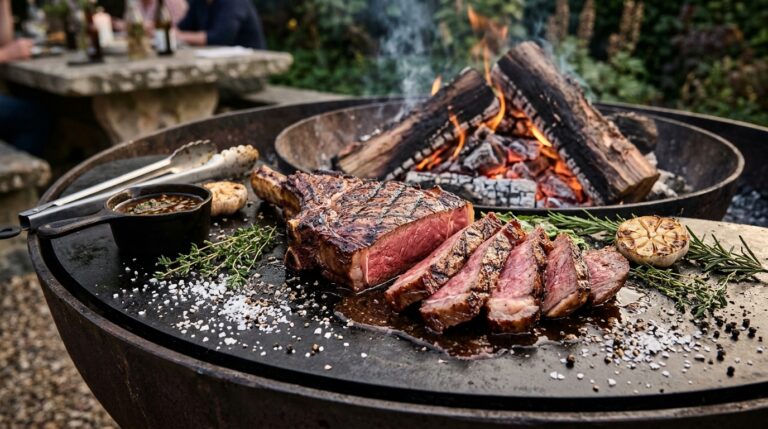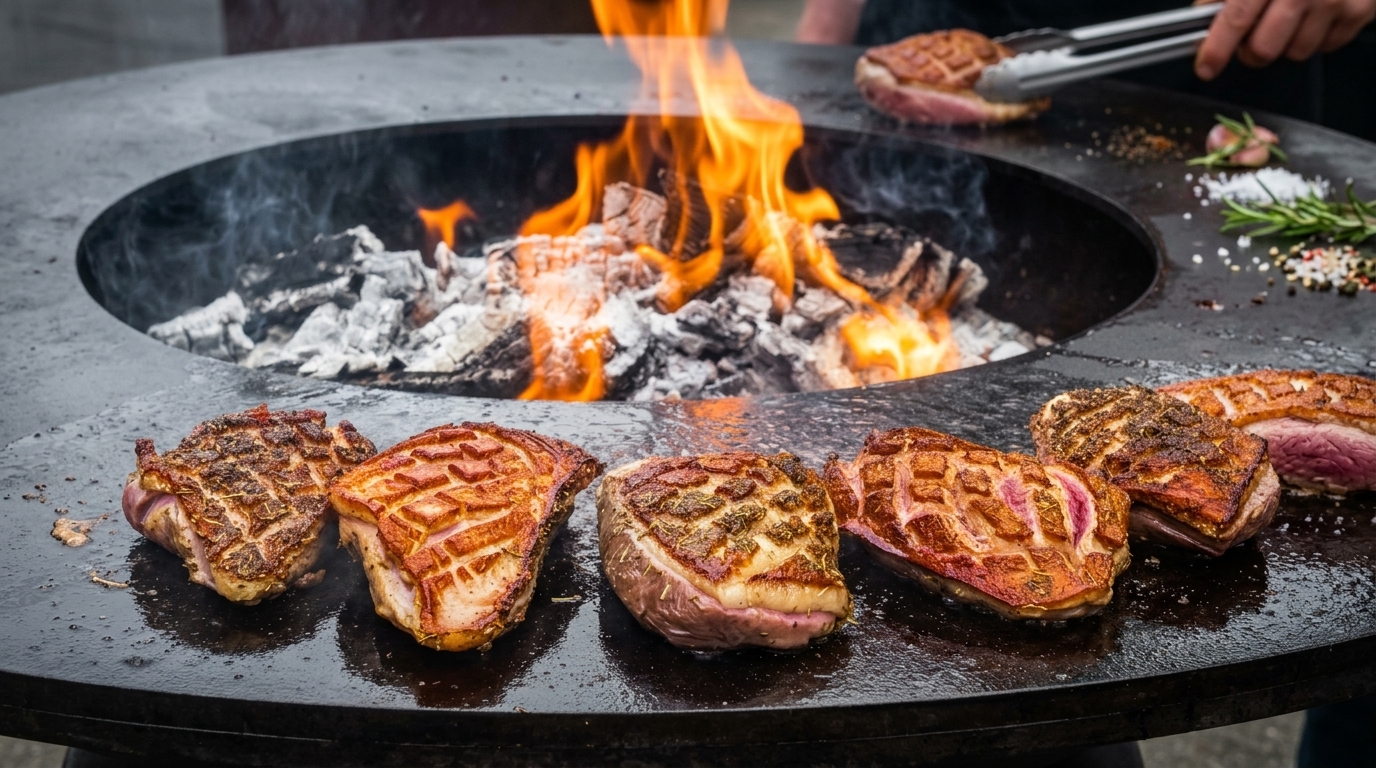
Duck breast is a great classic of fire cooking. On the plate of a fire pit plancha it is in its element: the fat renders slowly on the steel, the skin turns crisp and the fat does not drip onto the embers, so there are no flare-ups. The wood fire adds a smoky note that gas cannot give.
The recipe
Fire pit duck breast with honey and balsamic sauce
Ingredients
The duck
- 2 magret duck breasts, 350 to 400 g each
- Sea salt flakes and black pepper
- 2 sprigs of thyme
The sauce
- 2 tablespoons honey
- 3 tablespoons balsamic vinegar
- 1 shallot
- 100 ml chicken stock
Equipment
- A fire pit with plancha plate
- A sharp knife
- A probe thermometer
- A small saucepan
Method
- Score the fat. Take the breasts out 30 minutes before cooking. Score the skin in a criss-cross pattern every centimetre without cutting into the flesh. The fat will render faster and the skin won’t shrink.
- Prepare the fire. Light the fire pit 40 minutes ahead. Duck needs medium heat: position it halfway between the fire and the outer edge of the plate.
- Cook skin side down. Lay the breasts skin side down, with no added fat, for 8 to 10 minutes. Regularly scrape the melted fat towards the fire with the spatula: the skin should turn golden and crisp.
- Sear the flesh side. Turn the breasts and cook for 3 to 4 minutes on a hotter zone, until the core reaches 54 °C for pink.
- Rest. Place the breasts skin side down on a board, cover loosely and rest for 5 minutes.
- Make the sauce. Meanwhile, soften the chopped shallot in a spoonful of duck fat, add the honey, deglaze with the balsamic vinegar and pour in the stock. Reduce by half.
- Slice and serve. Slice the breasts thinly on the diagonal, season with sea salt and pepper and spoon over the sauce.
Choosing your duck breast
A true magret comes from a duck raised for foie gras: it is thick and covered with a generous layer of fat. Choose breasts of 350 to 400 g, deep red in colour, with white, firm fat. A magret from South-West France with PGI status is a sign of quality. Allow one breast for two people.
Core temperature and cooking time
Duck breast is best served pink. Overcooked, it becomes dry and tough. Here are the guidelines for a breast of about 380 g.
| Doneness | Core temperature | Time (skin + flesh) |
|---|---|---|
| Rare | 50 °C | 8 min + 2 min |
| Pink | 54 °C | 9 min + 3 min |
| Medium | 58 °C | 10 min + 4 min |
Our tips for perfect duck breast
- Always start skin side down and do 80 % of the cooking on that side: the fat protects the flesh.
- Don’t salt the skin before cooking: salt draws out moisture and stops it crisping. Season at the end.
- Keep the duck fat: collected from the plate, it is perfect for browning potatoes right next to the meat.
- Slice against the grain for a more tender bite.
Side dishes
Sarladaise potatoes, cooked in duck fat with garlic and parsley, are the perfect match. For a lighter option, halved peaches or figs grilled for a few minutes on the plate, or sautéed green beans.
The fire pit for your grilling
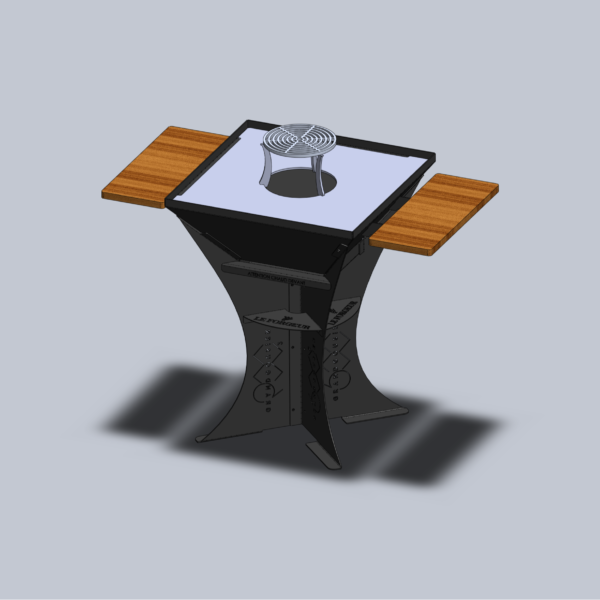
With its ring-shaped cooking plate around the fire, a fire pit plancha offers several heat zones to cook meat and sides at the same time. See all our fire pits.
-
- Handmade
Grandgousier 600 Square Plancha Fire Pit, 80 cm High
- Price range: 1175,00 € through 1396,00 €
- View This product has multiple variants. The options may be chosen on the product page
-
- Handmade
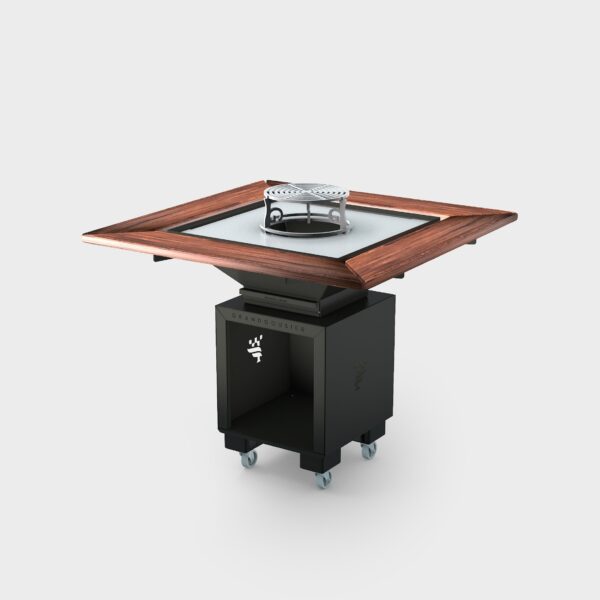
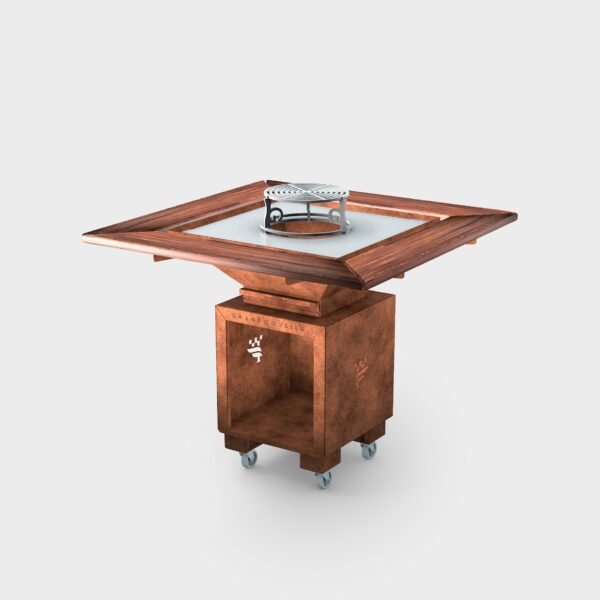
Grandgousier 750 Square Plancha Fire Pit with Wooden Surround
- 2763,00 €
- View This product has multiple variants. The options may be chosen on the product page
-
- Handmade
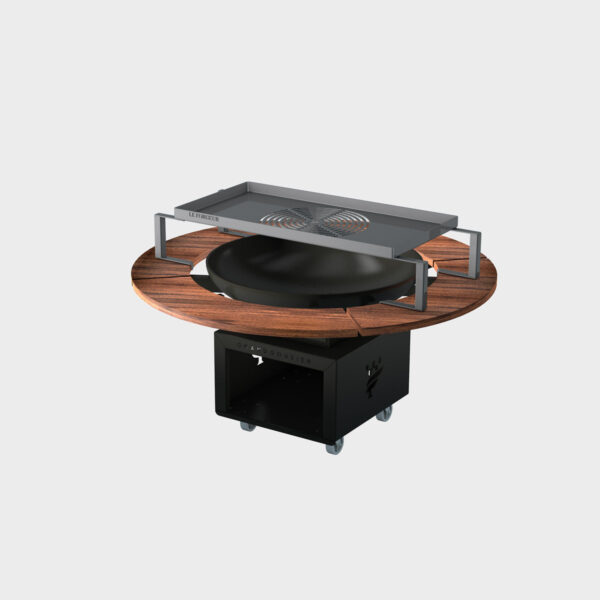
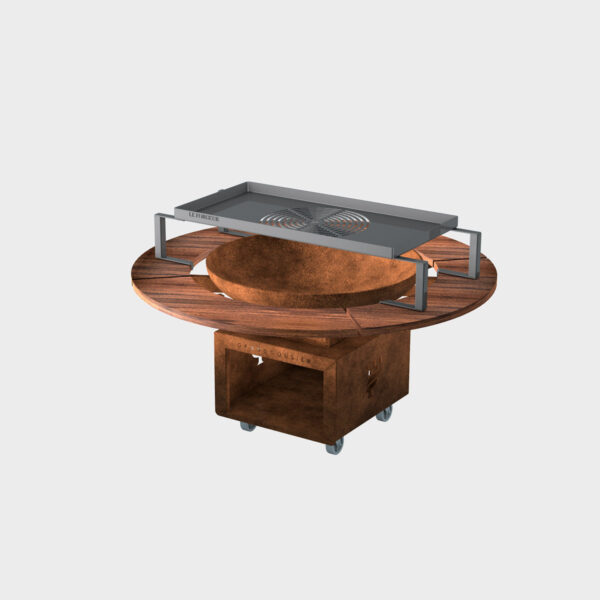
Grandgousier 750 Round Wood Plancha Fire Pit, 60 cm High
- 2055,00 €
- View This product has multiple variants. The options may be chosen on the product page
Frequently asked questions
How long does duck breast take on a fire pit?
About 12 minutes for a 380 g breast cooked pink: 9 minutes skin side, then 3 minutes flesh side, followed by 5 minutes of resting.
Do I need to add fat to the plate?
No. The duck fat melts within the first few minutes and is more than enough. Scrape away the excess as you go.
Can I prepare duck breast in advance?
You can score it and marinate it for a few hours in the fridge, for example with honey and thyme. Cook it at the last minute.