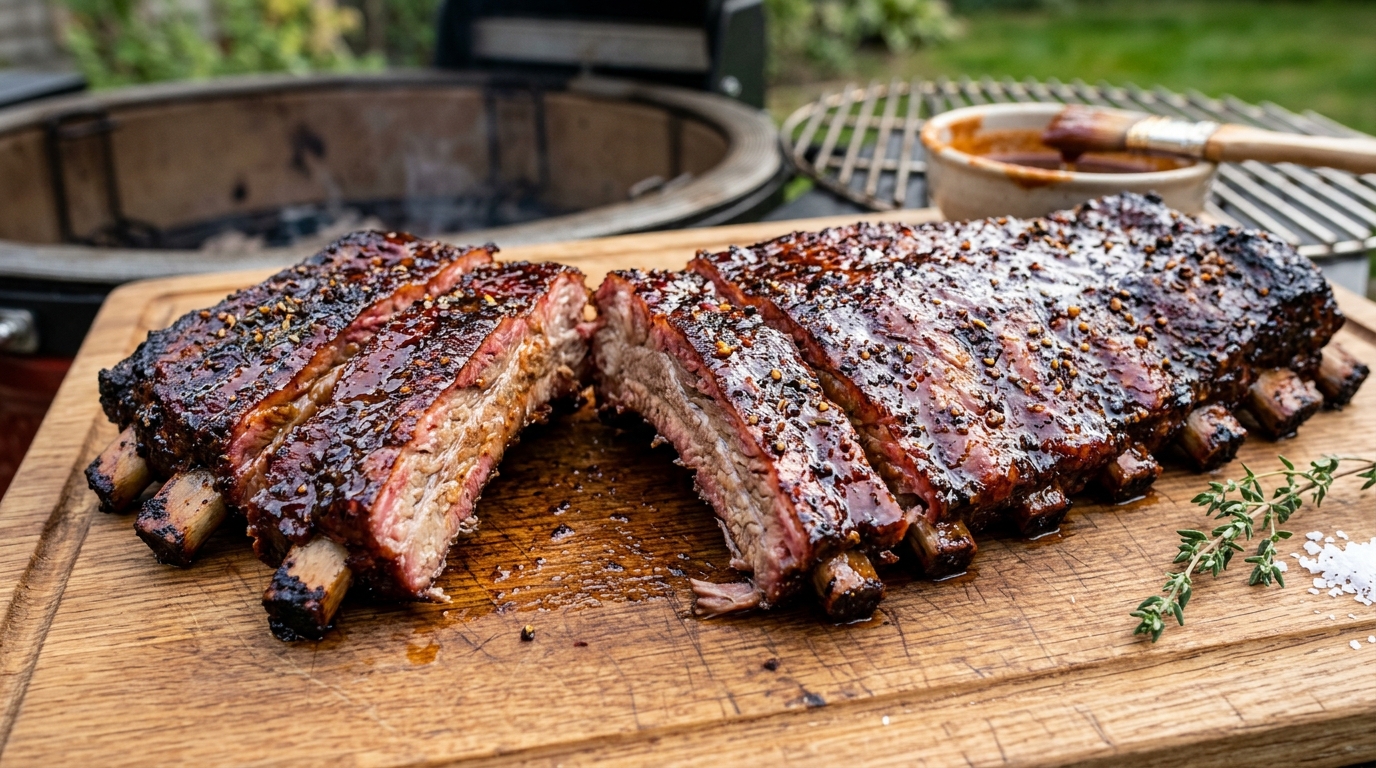
Spare ribs are a pillar of American barbecue. The 3-2-1 method is the most reliable way to nail them: three hours of smoking, two hours wrapped in foil to tenderise the meat, and one hour to glaze with barbecue sauce. The kamado, which holds a low, steady temperature for hours, is perfect for this cook.
The recipe
Kamado spare ribs, 3-2-1 method
Ingredients
The ribs
- 2 racks of pork spare ribs, about 1.5 kg each
- 2 tablespoons mustard
- 250 ml barbecue sauce
The rub
- 3 tablespoons light brown sugar
- 2 tablespoons smoked paprika
- 1 tablespoon fine salt
- 1 tablespoon black pepper
- 1 teaspoon garlic powder
- 1 teaspoon onion powder
- 1 teaspoon mustard powder
For wrapping
- 4 tablespoons apple juice
- 30 g butter
- 2 tablespoons honey
Equipment
- A kamado with heat deflector
- Lump charcoal and 2 to 3 chunks of smoking wood (apple, cherry)
- Heavy-duty foil
- A basting brush
Method
- Trim the ribs. Remove the white membrane from the back of the ribs: lift it with the tip of a knife and pull it off with kitchen paper. Trim off excess fat.
- Season. Brush the ribs with mustard, then sprinkle the rub over all sides. Leave them while the kamado heats up.
- Set up the kamado. Light the charcoal, fit the deflector and settle the temperature at 110 °C. Add the smoking wood to the coals.
- 3 hours: smoking. Place the ribs on the grill, bone side down, and smoke for 3 hours without opening.
- 2 hours: wrapping. Place each rack meat side down on a double sheet of foil, on top of the apple juice, butter and honey. Seal tightly and return to the kamado for 2 hours.
- 1 hour: glazing. Unwrap the ribs, put them back on the grill and brush with barbecue sauce. Cook for 1 hour, glazing every 20 minutes.
- Check for doneness. Lift the rack in the middle with tongs: it should bend and the surface should crack. The meat should come away from the bone without falling off.
- Serve. Rest for 10 minutes, then cut between the bones.
Spare ribs or baby back ribs?
Spare ribs are cut from the belly: wider, fattier and more flavourful. Baby back ribs come from the top of the rib cage, near the loin: shorter, leaner and more tender. For those, shorten the method to 2-2-1, five hours in total.
The 3-2-1 method at a glance
| Stage | Time | Purpose |
|---|---|---|
| Smoking | 3 h at 110 °C | The meat takes on smoke and forms its bark |
| Wrapping | 2 h at 110 °C | The collagen melts and the meat tenderises |
| Glazing | 1 h at 110 °C | The sauce caramelises and sticks to the meat |
Our tips
- Don’t skip removing the membrane: it stops the rub and smoke getting in and turns rubbery.
- Barbecue sauce at the end only: it is high in sugar and would burn during smoking.
- Adjust to your ribs: if the meat is already very loose after wrapping, cut the last stage to 30 minutes.
- Use a rib rack to cook several racks upright in a smaller kamado.
Side dishes
Coleslaw, grilled corn on the cob with butter, potato wedges or baked beans: ribs call for generous sides. A cabbage salad with cider vinegar adds freshness to balance the sweet sauce.
Which kamado for ribs?
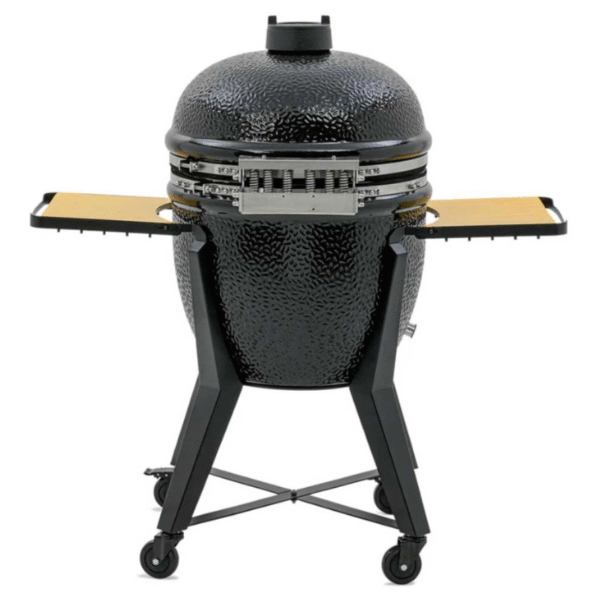
A rack of spare ribs measures 35 to 45 cm: choose a kamado with a grill of at least 46 cm to lay it flat. See all our kamados.
-
- Sale!
VESSILS FLEET GB 22 Large Kamado 49 cm BLACK
- Original price was: 1599,00 €.1299,00 €Current price is: 1299,00 €.
- View


Frequently asked questions
How long do ribs take on a kamado?
About 6 hours at 110 °C for spare ribs with the 3-2-1 method, and 5 hours for baby back ribs with the 2-2-1 method.
Should I remove the membrane from ribs?
Yes. This thin skin on the bone side stops the seasoning getting in and stays tough after cooking. It comes off easily if you pull it with kitchen paper.
How do I know when ribs are done?
Use the bend test: lift the rack in the middle with tongs. If it bends clearly and the surface cracks, it is ready. The meat reaches 90 to 95 °C internally.